
45 on the Clyde: A Royal Welcome

45 on the Clyde: A Royal Welcome
This year marks 45 years since the formation of the Clyde Marine Unit, and to mark the anniversary we are proud to share a series of articles charting its history, from its earliest days to the present.
A royal visit to Devonport
In mid-July 1990, the Clyde Marine Unit found itself a long way from home, supporting a royal visit to Devonport.
Two brand new police launches, Dignity and Tactful, built for the CMU, were sent south to assist with the occasion, working alongside colleagues from the Devonport Marine Unit.
The task fell to Sergeant Murdoch, who commanded Dignity, and Sergeant Hoare, who commanded Tactful. Sergeant Murdoch had been closely involved in fitting out the new boats and, alongside supporting the royal visit itself, took the opportunity to assist Devonport colleagues throughout the unit's stay.
The unit was delighted with the performance of the new craft, and the visit was a complete success for all concerned, a fitting first outing for two boats that would go on to serve the CMU for years to come.
Bringing the new boats home
With the royal visit complete, there remained the small matter of getting Dignity and Tactful back to the Clyde.
On Tuesday 26 July, the two launches set sail from Devonport, bound for home. Sergeant Murdoch commanded Dignity, with a crew of two constables. Sergeant Hoare commanded Tactful, with a further two constables, along with a member of the force's marine engineering team on board.
What followed was, in Sergeant Murdoch's own words, a very interesting voyage.
Leaving Devonport
"We set sail from Royal William Yard, Devonport, at 0915 hours and soon cleared the famous Plymouth breakwater to enter the Sound. The weather at this time was a moderate sea state, with southwesterly winds, force 4 to 5. Three hours later, we approached Lizard Head, notorious for its extreme weather conditions. The wind had increased to force 5 or 6, but we maintained our running speed of 13 to 14 knots and altered course, heading for our next landmark, Land's End.
"The wind continued to increase to force 7, and the sea state was rough, with waves up to 20 feet high. Three hours after passing the Lizard, we rounded Land's End, the westernmost point of England."
A strict test
"The next stage of our passage, from Land's End to Pembroke Dock, was to prove a strict test of our navigation skills. It took us past Cape Cornwall, the point of no return, and we then had to travel the remaining 100 miles in rapidly deteriorating conditions.
"Most of the remainder of the voyage to Pembroke Dock found us sailing over 30 miles from land. Due to the height of the waves, we were unable to locate one another on our radar screens, and we had to navigate by dead reckoning, steering a steady course by compass and maintaining a constant speed. By this method, we were able to estimate with accuracy exactly where we were on the chart.
"We carried out this procedure for 90 miles before sighting land on our radar. We quickly plotted our position and found, to our delight, that we were only one mile off our intended course."
Pembroke Dock
"We entered the port of Milford Haven at 2200 hours, with darkness descending rapidly, and made Pembroke Dock after a long and tiring journey of almost 13 hours. It was a relief to have a meal and bed down on the launches for a good night's sleep.
"The severe weather conditions, the worst at that time of year for the past 50 years, prevented us from resuming our voyage until Tuesday 2 August, a week later."
Isle of Man
"We set sail for the second leg of our journey in greatly improved weather, with a change of crew on Tactful. The sea conditions were ideal, and we managed to cruise at a steady 24 knots, thanks to a little help from the wind and tide.
"We spotted the Isle of Man some 40 miles away on the horizon, a lovely sight. After receiving our berthing instructions from harbour control, we entered Douglas Harbour by 1900 hours. We completed maintenance and refuelling, then went off for a tour of this beautiful town with the help of the Isle of Man Police and the harbour police. All too soon, we were back on board and settled for the night."
The last leg
"The following morning, we woke to fairly miserable weather, with showers and an overcast sky. At 0930 hours, we set sail for the last leg of our journey, a mere 155 miles.
"We soon rounded the northeast corner of the Isle of Man, where the sea state worsened, forcing us to reduce speed to 14 knots to maintain a steady course. At 1200 hours, we passed the Mull of Galloway, back in bonnie Scotland at last, and two hours later we were approaching the bird sanctuary of Ailsa Craig. This is normally the extreme end of our patrols, so we began to feel that we had really made it.
"At 1530 hours, we were met at the north end of the Isle of Arran by our senior officer, who was more than delighted and relieved to see our two small launches coming bravely over the horizon, ploughing their way north in such heavy seas and flying the Force's insignia at their gaffs."
A proud moment
"This was indeed a very proud moment for everyone concerned in the planning and navigation of this journey, totalling some 525 miles. The total steaming time was 29 hours and 5 minutes, at an average speed of 17.15 knots.
"I have every reason to believe that this is the longest sea voyage completed by any police launch manned by police officers in Britain.
"I can only close this account of our voyage by thanking our friends and colleagues at the Devonport Marine Unit for all their help and comradeship during our stay with them."
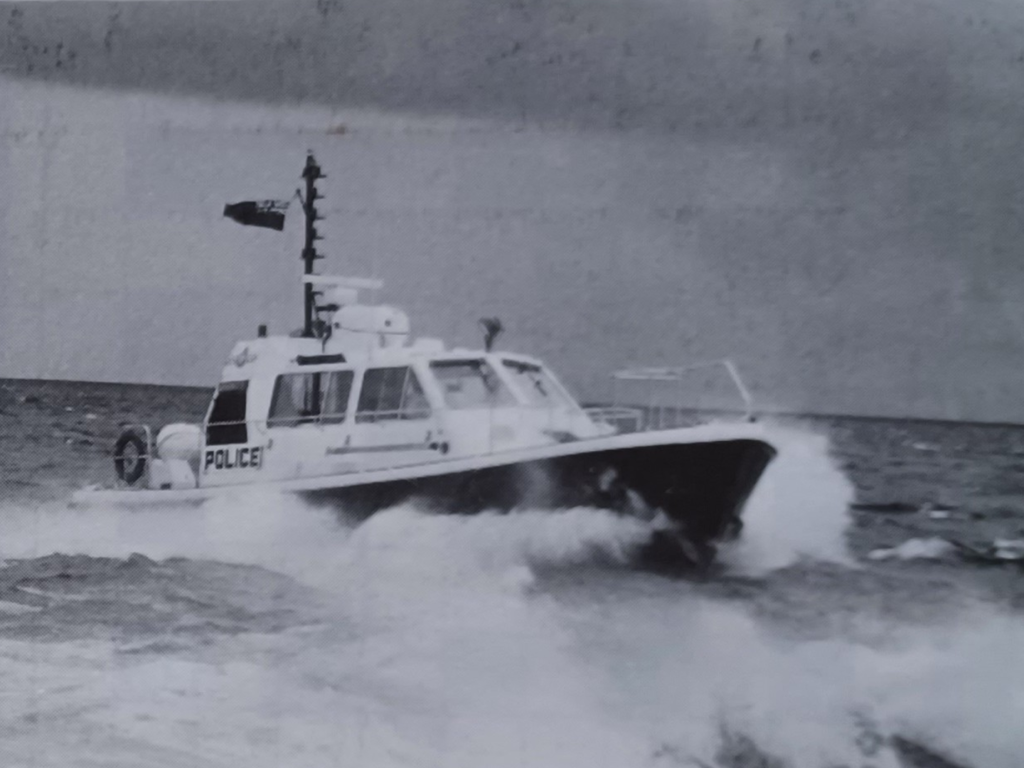 Calm waters...
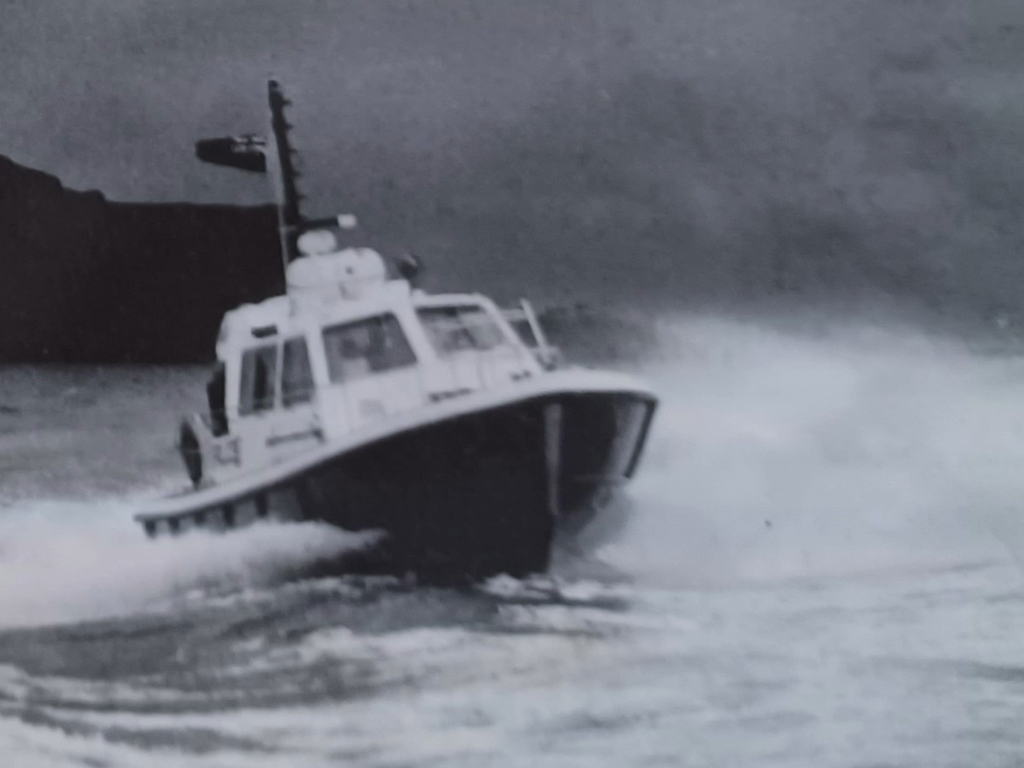 ...and rough seas
Royal Yacht Britannia, London, 1990
The CMU's role in supporting royal engagements continued through the following years. Between 1 and 3 August 1990, CMU crews travelled to London for the second time to provide protection for the Royal Yacht Britannia. Images from the visit show the unit's boats being unloaded at Wapping Police Station ahead of the operation.
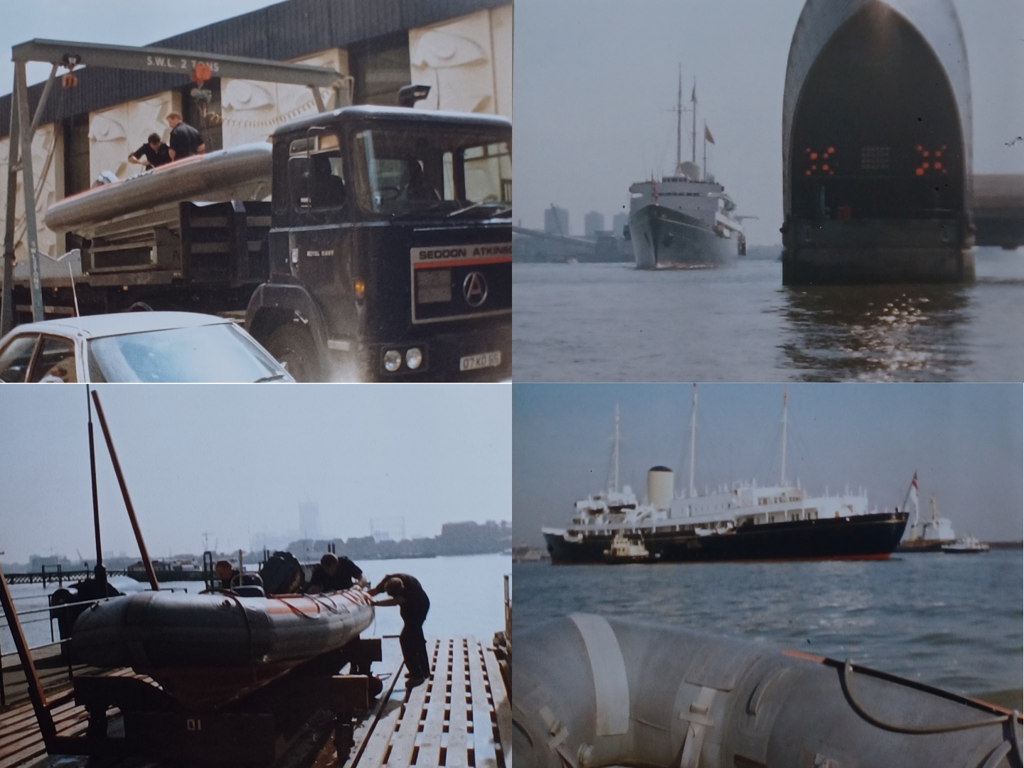
Royal Yacht Britannia, Liverpool, 1993
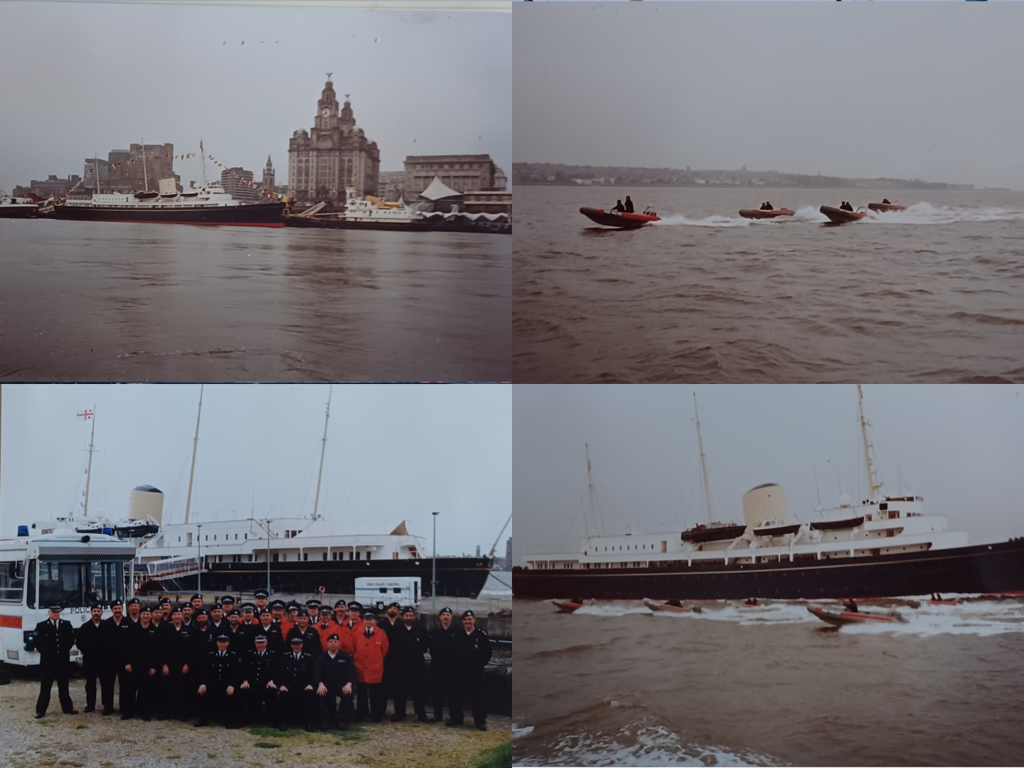
On Tuesday 1 June 1993, the Royal Yacht Britannia departed Liverpool via the River Mersey, with CMU crews providing a final salute as she left. Photographs from the visit also show the Royal Yacht at Liverpool's Pier Head, seen from one of the unit's boats on the water.
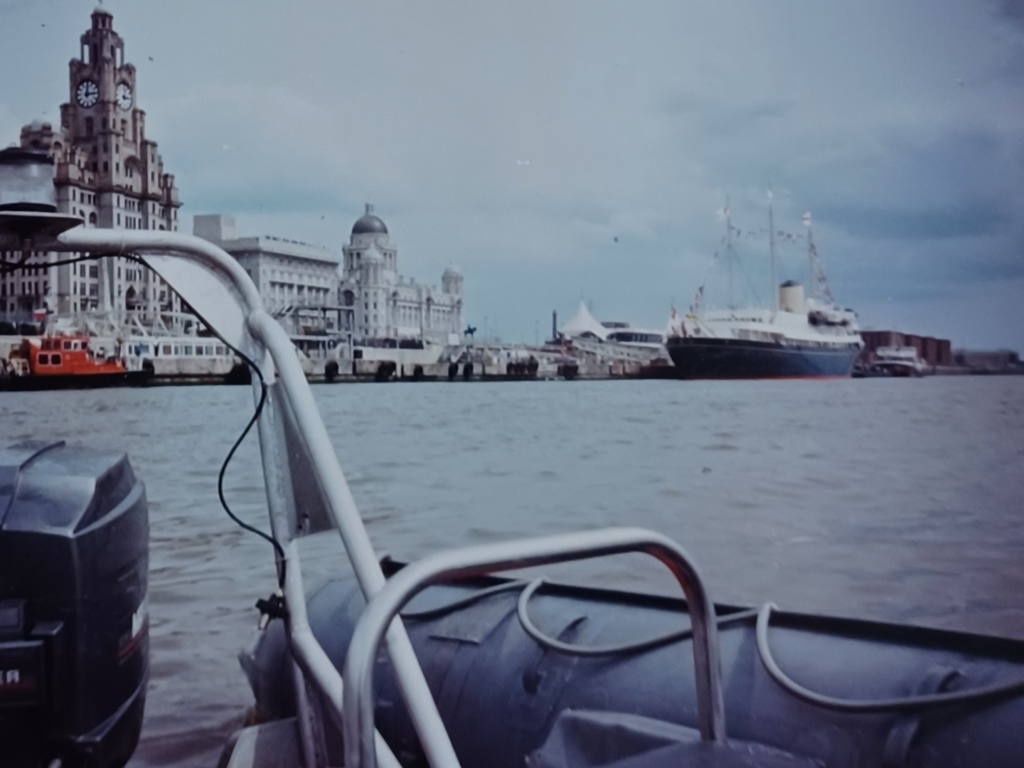
QE2 in the Forth, 1994
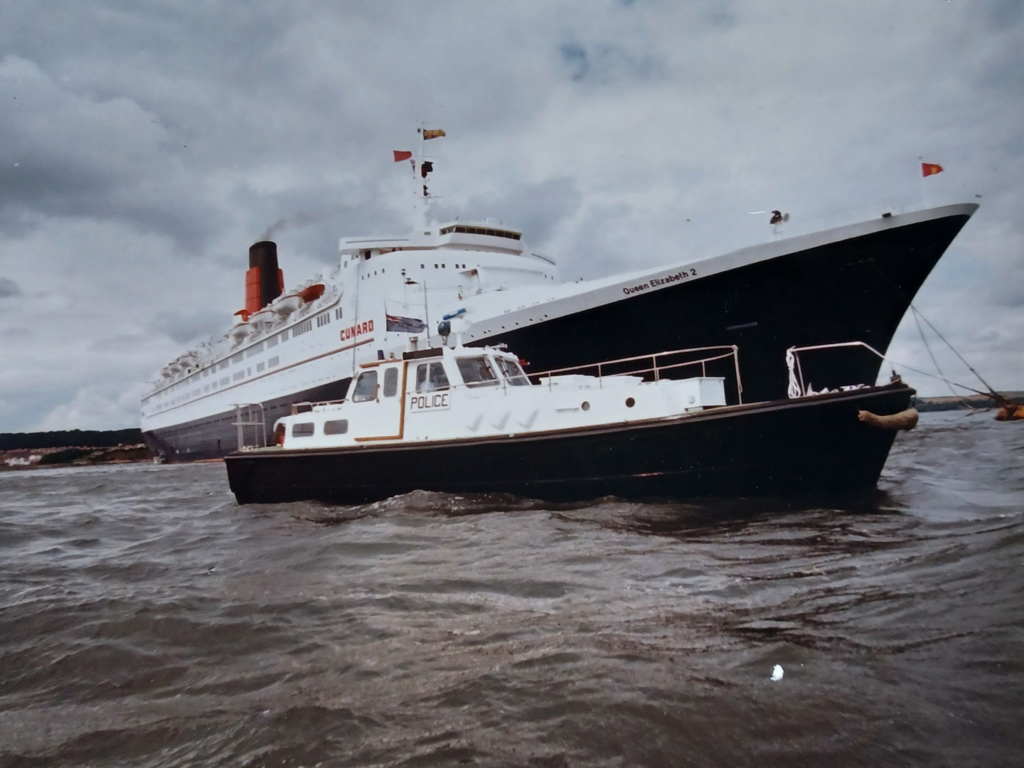
In the summer of 1994, the QE2 visited Greenock, with the CMU assisting with traffic control on the water. Further images from the visit show the QE2 secured in the Forth.
Interest in joining our Clyde Marine Unit?
Find out more about our Marine Units and how to apply.

