
45 on the Clyde: Protests, Patrols and Escorts

45 on the Clyde: Protests, Patrols and Escorts
This year marks 45 years since the formation of the Clyde Marine Unit, and to mark the anniversary we are proud to share a series of articles charting its history, from its earliest days to the present.
The unit's motto, in omnia paratus - prepared for all things - was put to the test almost as soon as the paint had dried on its first launches. Across the decades that followed, officers found themselves at the centre of some of the most sensitive and high-profile operations to take place on the Clyde.
The unit's first escort: Operation Balaclava
Some of the CMU's earliest work took it far beyond its usual waters.
The unit's first seagoing escort operation came with Operation Balaclava, when specialist naval equipment was transported by sea from Barrow-in-Furness to Dounreay in the north of Scotland.
The equipment was carried on barges, which were towed by the former fishing vessel Northella, escorted by the Clyde Marine Unit.
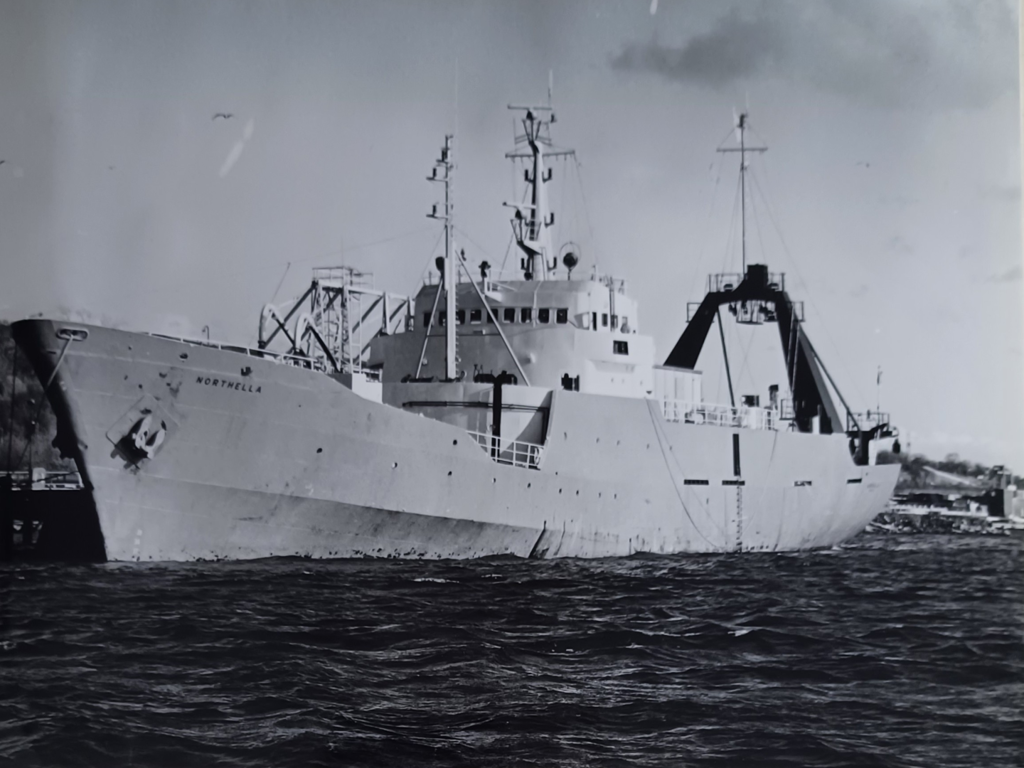 Over two weeks, the operation tested the unit's capabilities in open water for the first time. It also marked another milestone: the first time the unit used rigid inflatable boats, or RIBs, a type of vessel that would go on to define much of the CMU's work in the years that followed.
Pictured is Inspector Whyte returning to Northella after a daily briefing with local police, alongside Sergeant Trout and Constable Gallagher aboard one of the unit's RIBs.

The unit's biggest test yet: the events of 1988
If Operation Balaclava had shown what the unit could do offshore, the events of 1988 showed what it could do under sustained pressure.
Across two separate periods that year, the CMU mounted the largest waterborne operation undertaken by a marine unit up to that point, in response to protests on the Clyde. Officers worked twelve-hour shifts throughout, supported by colleagues drafted in from land-based roles.
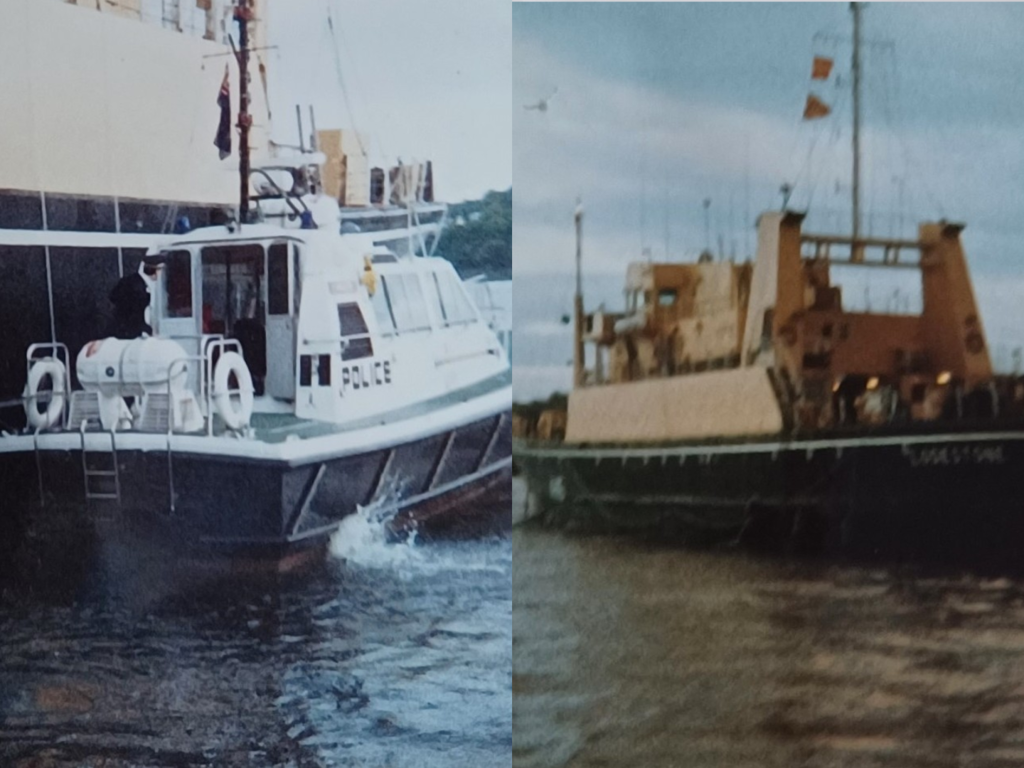
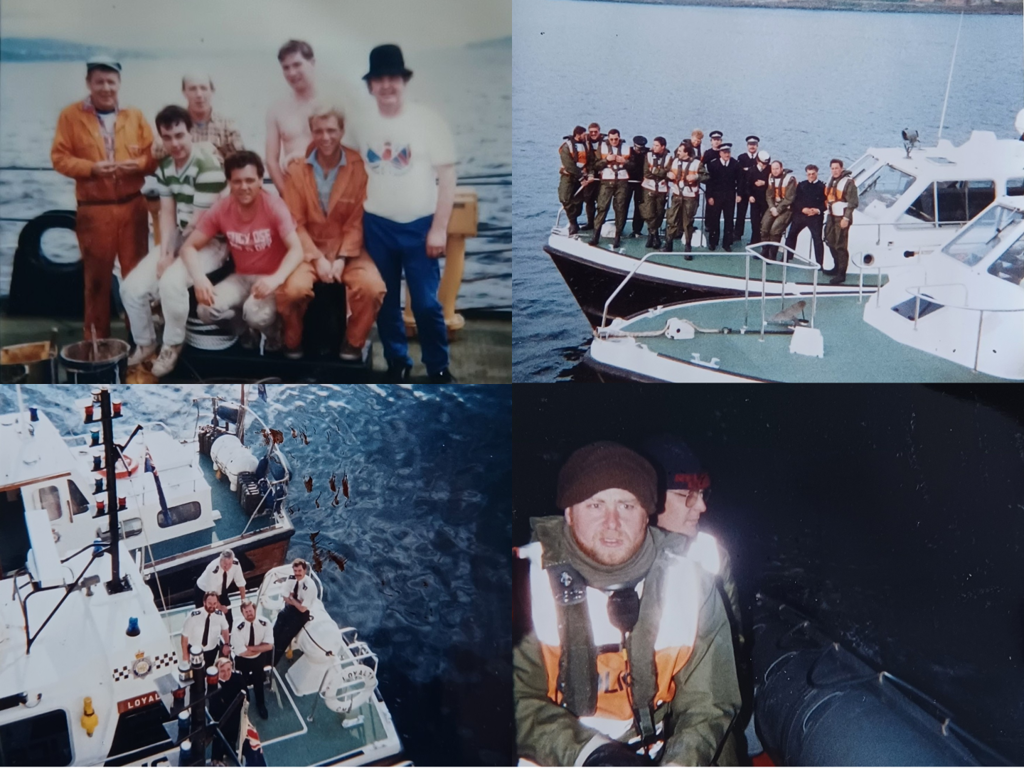
At the height of the operation, resources were spread across multiple locations on the water, working around the clock to maintain safety and security. A support vessel provided food, rest and workshop facilities for crews, and served as the base for round-the-clock command and coordination.
The photographs from this period capture the scale and character of the operation vividly, from crews aboard the unit's vessels to night patrols carried out by officers on the water.
Causing waves, creating headlines
By 1988, the unit was well established, and its growing profile was matched by recognition beyond the force itself. A newspaper cutting from the period described the CMU as "one of the police's most elite waterborne units," adding that "to the majority of the people in Helensburgh, Garelochhead and on the Rosneath peninsula, the men and craft of the Clyde Marine Unit are a familiar and often welcome sight."
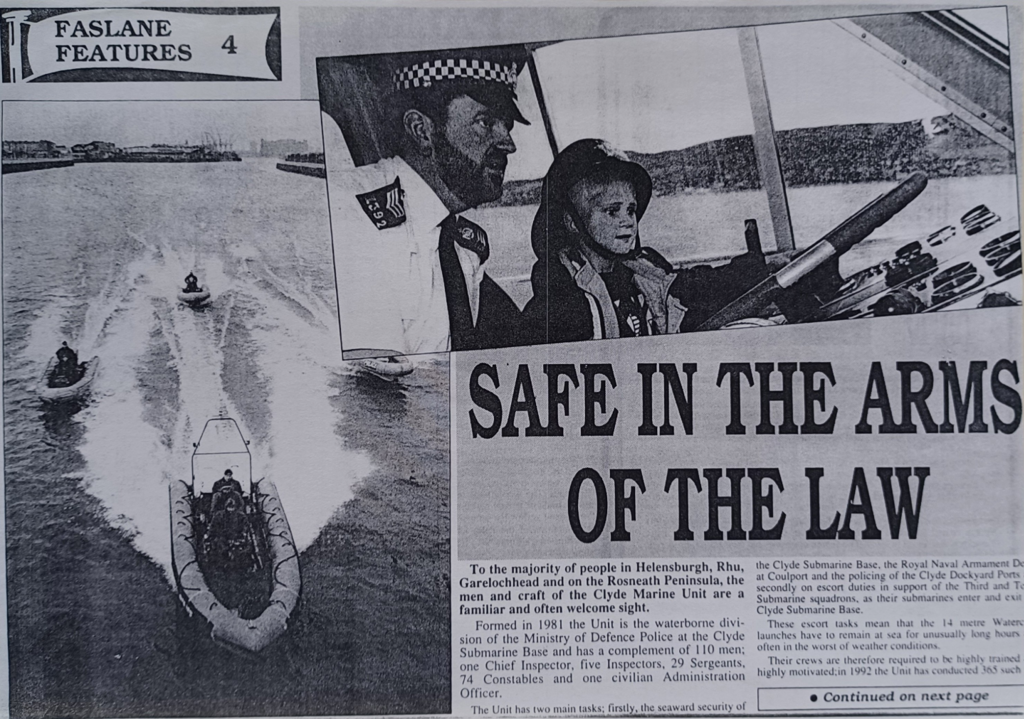
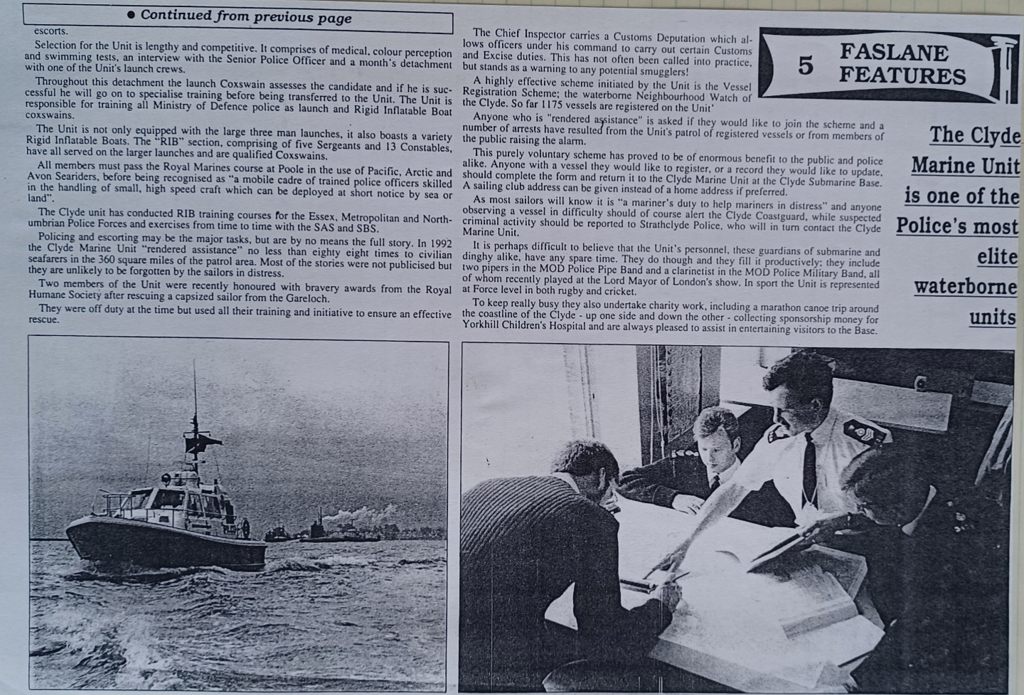 A feature in our Force's magazine that year offered a profile of the unit, noting that "since its inception almost nine years ago, the unit has been called upon to carry out unusual tasks at sea." It was around this time that the unit adopted its motto, in omnia paratus — a motto that still captures the spirit of the CMU today.
A changing world, a constant duty
The nature of the unit's work has shifted over the decades, but its underlying purpose - keeping the Clyde safe for those who work and travel on it - has remained constant.
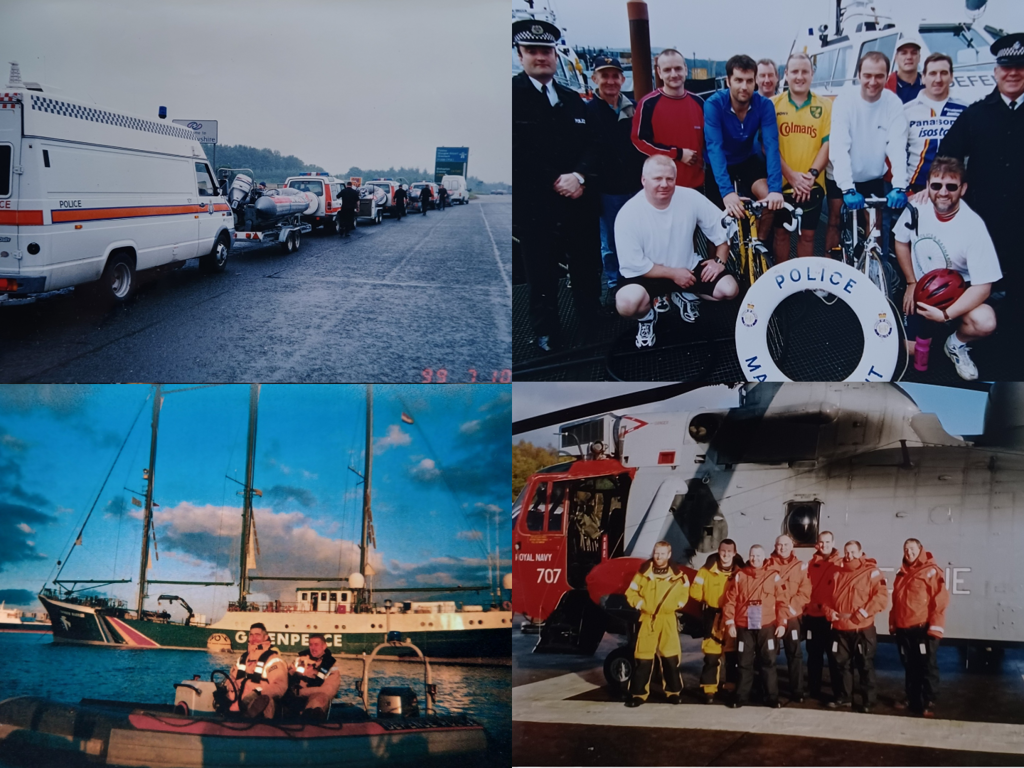
In July 1999, the unit provided an escort for a submarine returning to Barrow-in-Furness, continuing a role that had been central to the CMU's work since its founding almost two decades earlier.
That same year, officers took part in a different kind of challenge: a sponsored cycle ride in September 1999 in aid of a colleague's children, reflecting the community spirit that has always run alongside the unit's operational duties.
Protest-related operations returned in March 2003, when officers were involved in a security operation at Marchwood Port - a reminder that the skills developed in 1988 remained just as relevant fifteen years on.
The unit's training also continued to evolve. In October 2006, officers took part in helicopter training exercises with a search and rescue helicopter crew, adding another capability to a unit that had come a long way from its earliest days.
From Barrow-in-Furness to Marchwood, the story of the CMU's operational history is one of continuity: new challenges met, decade after decade, by the same readiness that gave the unit its motto.
Interest in joining our Clyde Marine Unit?
Find out more about our Marine Units and how to apply.

