
45 on the Clyde: The Berth of the Marine Unit

45 on the Clyde: The Berth of the Marine Unit
This year marks 45 years since the formation of the Clyde Marine Unit, and to mark the anniversary we are proud to share a series of articles charting its history, from its earliest days to the present.
Firstly, we want to acknowledge that the following series would not have been possible without a remarkable act of generosity.
The family of former CMU Inspector Trout recently donated an album to the unit documenting its history since 1981, comprising hundreds of photographs and press cuttings collected and preserved over the decades.
It is a rare and valuable record, and we are enormously grateful to the Trout family for entrusting it to us so that this story can be told.
But an archive like this is only half the story. The other half belongs to the officers who lived it: the men and women who have crewed the CMU's launches, trained its coxswains, stood watch in all weathers, and kept the Clyde safe for the last 45 years. Whether serving in the unit's earliest days or are part of the team today, this series is as much a tribute to them as it is a record of the unit itself. None of what follows would have been possible without their service, but we hope everyone enjoys seeing it reflected back.
Over the coming weeks, we will be drawing on the album to bring 45 years of the CMU's history to life.
We start at the beginning: the formation of the unit itself.
The formation of the CMU
The Clyde Marine Unit was formed in 1981, brought together from the boat sections previously operated separately at CSB Faslane and RNAD Coulport.
Unlike its shore-based MDP colleagues, the newly formed unit operated independently, with its principal task being to maintain the integrity of the protected area at Faslane and Coulport, and to safeguard the safe transit of nuclear submarines within the dockyard ports.
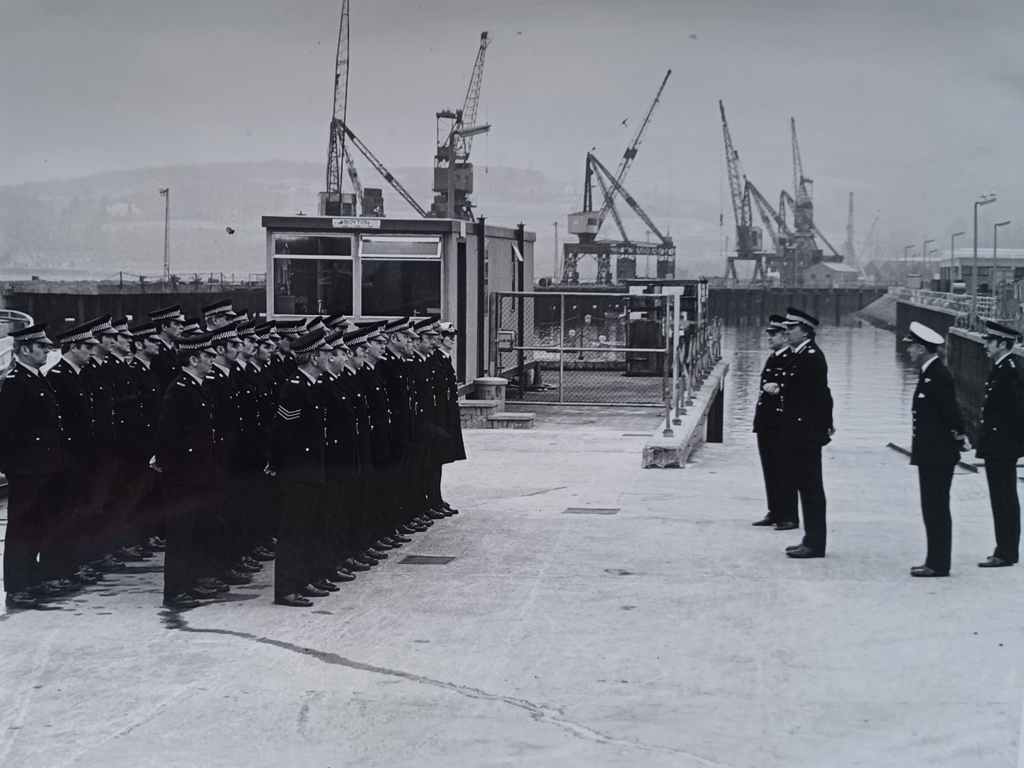
A photograph from the album captures the unit on parade on their first day, alongside ACC Edwards and Inspector Whyte, who became the first Senior Police Officer of the Clyde Marine Unit, a role that laid the foundation for the leadership structure the unit still relies on today.
Finding their sea legs: Improvised beginnings
Every unit has to start somewhere, and the CMU's early years were defined as much by resourcefulness as by resources.
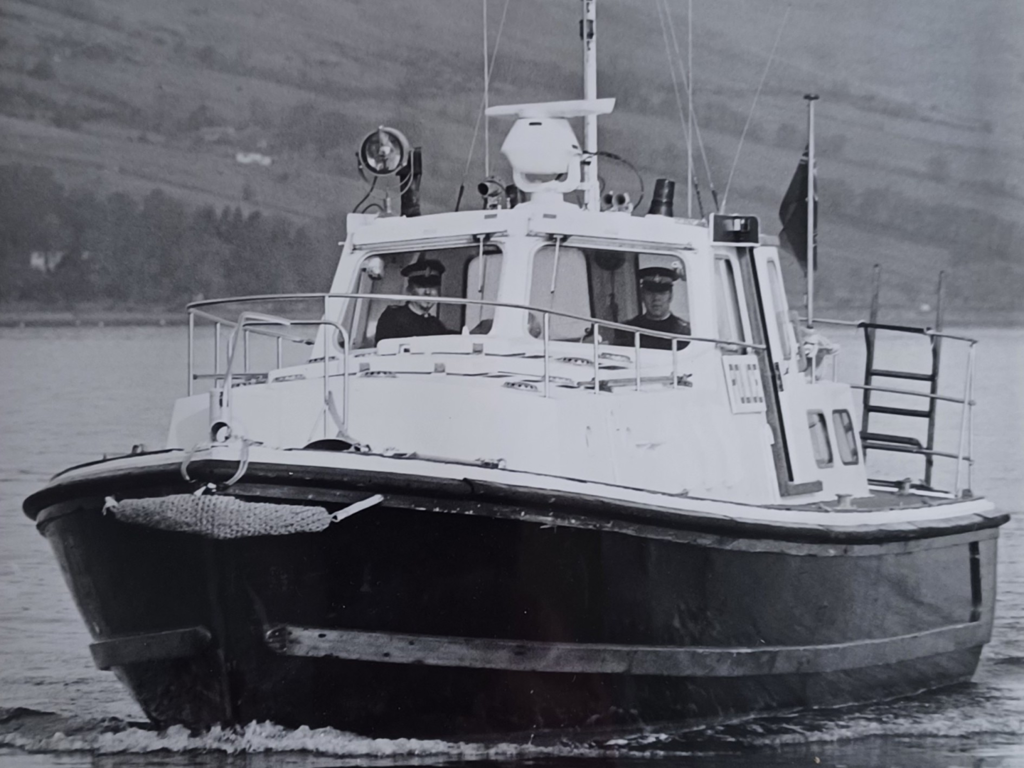
One of the more memorable vessels from this period was range safety launch 7443, transferred to the unit in recognition of its unique role operating in severe weather conditions.
Originally finished in a striking "day-glo" colour scheme, before later being repainted in police black and white and becoming known affectionately as Big Bertha.
Having come from Portland, the launch played an important practical role: preparing coxswains and crews for handling the larger, 14-metre watercraft launches that would follow.
It was this transition that led to demand a higher standard of coxswain qualification to handle the new, larger vessels, a requirement that shaped the syllabus still used to train coxswains today..
The unit's first vessels
As the CMU established itself, its fleet began to grow.
The album records several early vessels central to this period, including the launches Starship (6547), 7706, Snoopy (7875), and 7301.
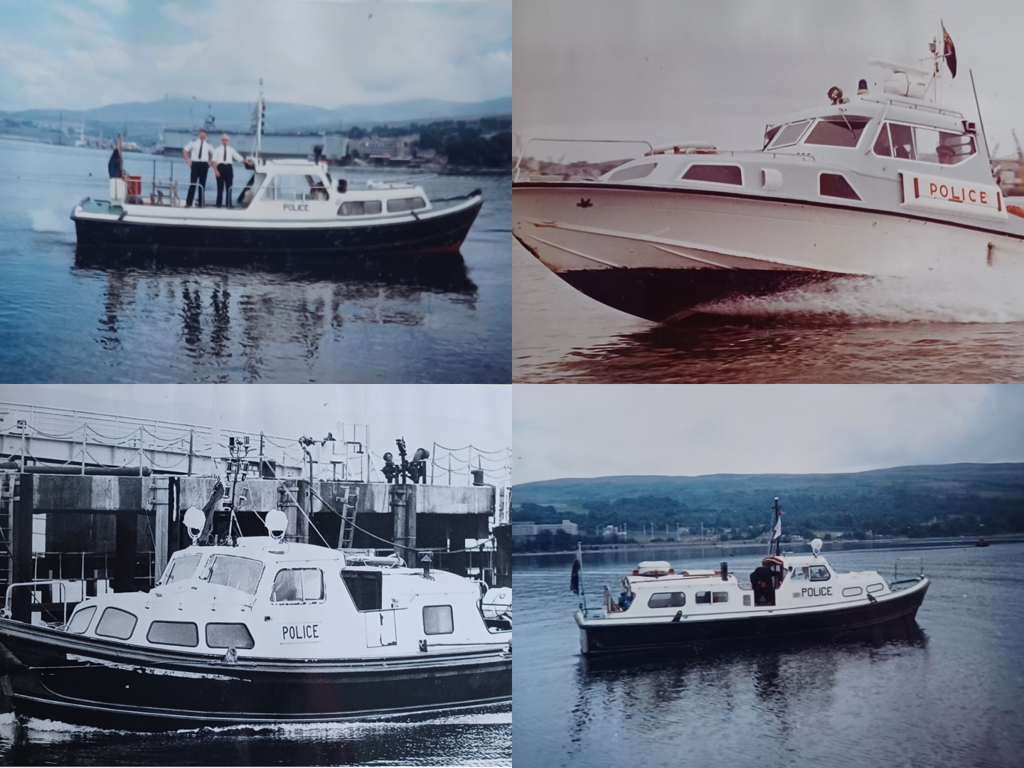
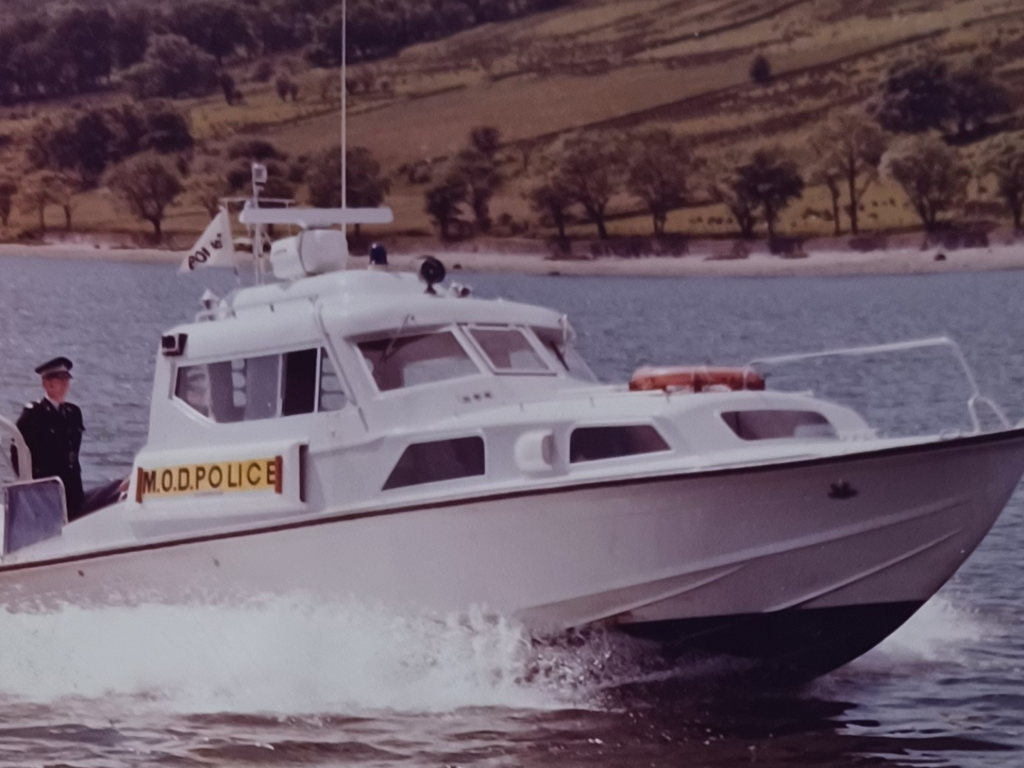
The fleet was later strengthened by the transfer of launch 7874 from HMNB Chatham, bringing the total to four launches and giving the fledgling unit the capacity it needed to fulfil its growing responsibilities.
First recognition: the rescue at Garelochhead
Just months after the CMU formation, its officers were called into action, with lives on the line.
A newspaper report from the time captures the drama of the night: On 21 November 1981, in pitch darkness and a storm-lashed sea near Garelochhead, two men had been pitched into the water as they rowed ashore from their yacht.
Their cries were heard by PC Cairns and Special Constable McKernie, who launched a rowing boat and, for fifteen minutes, each held a man's head above water until they could be picked up by the Ministry of Defence Police launch.
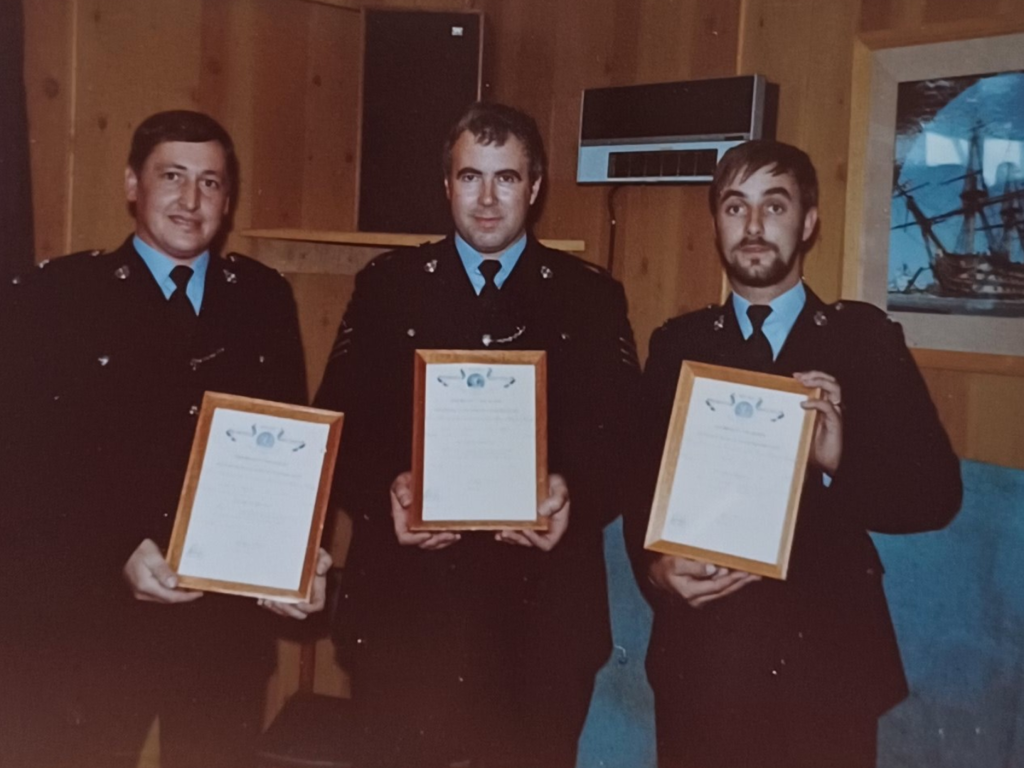
Sergeant Hoare and Constables Stuart and Smith were awarded Royal Humane Society commendations for the rescue of two men in danger of drowning in the Gareloch.
It was a defining early moment for the unit, a demonstration, right from its first year, of the vital and sometimes life-saving role the CMU would go on to play on the Clyde for the next 45 years.
Interest in joining our Clyde Marine Unit?
Find out more about our Marine Units and how to apply.

