
DS Brown

DS Brown
From RAF Carlisle to the Heart of Defence Intelligence
When DS Brown joined the Ministry of Defence Police at RAF Carlisle in 1986, the Force looked very different to what it is today. With no military background - his closest experience being the Boys Brigade, 17th Teesside company - he arrived with a curiosity about policing and a determination to make his mark.
Nearly four decades later, he supervises one of the most dynamic and consequential teams in the Force: the Intelligence Desk within the Intelligence, Crime and Operational Support (ICOS) department.
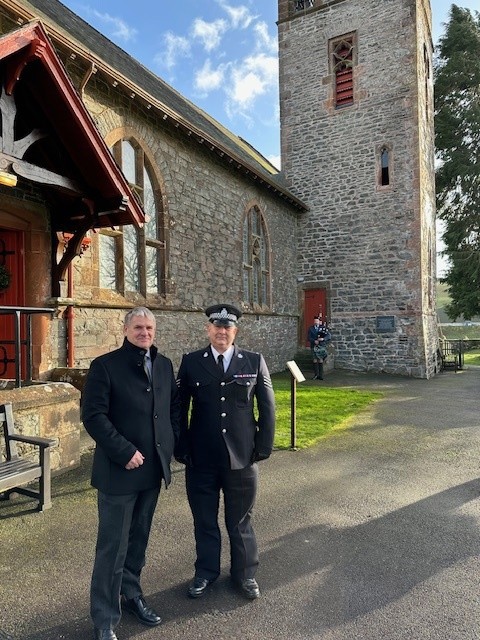
From the Beat to the Detective's Chair
In the early years, uniform policing at RAF Carlisle meant security work, with firearms training playing a supporting role - primarily to assist with nuclear movements across the country rather than front-line armed response.
"Firearms wasn't my reason for joining," he explains. "I always wanted to get more involved in crime investigations."
That opportunity came in 1992, when he secured an attachment to what was then known as the CID. By 1993, he had made the move permanently, becoming a Detective. In 2004, he transitioned to Intelligence, a role that has kept him engaged, challenged, and inspired ever since.
A Day in the Life of the Intelligence Desk
The Intelligence Desk has a rhythm to it - but no two days are ever the same.
Each morning DS Brown begins with collating the previous day's incidents, intelligence, crime reports, and resource updates into a daily management briefing document. Whilst we're all getting ready for work, he presents this to the departmental management team, where decisions, actions, and taskings are agreed. The briefing then travels to the Force Daily Management Meeting - another opportunity for decision-making at the highest level.
For the rest of the day, the team works through those actions while triaging, researching, publishing, and disseminating intelligence submissions from across the MDP, the wider MOD, and external referrals. All the while, one eye remains on building the next day's briefing.
It is a seven-days-a-week operation.
The Rewarding Reality
"The diversity of topics is the main interesting point," he says. "It never ceases to amaze me that we are often, in some way, dealing with matters that are in the national press — especially matters relating to international politics."
Over his career, he has worked on cases ranging from routine theft to supporting the investigation into the Manchester Arena bombing. But it is not always the headline cases that stand out.
"Sometimes it is the little successes that make a difference to a week. The team might be tasked with tracing and locating an offender - a bit like the TV programme Hunted. Finding that person is always a highlight."
For him, the greatest reward is people. Instilling enthusiasm in his team, his colleagues, and the external partners he works with daily is what drives him.
An Ever-Changing Landscape
Working in intelligence means the landscape is always shifting.
"The diversity of the role and the ever-changing landscape is always a challenge," he reflects. "But that is also what makes it so interesting."
ICOS operates with a culture of getting things done - exploiting every opportunity available, even where the goal is disruption rather than prosecution. The department is small enough that everyone knows and supports one another, with management actively involved in the work of their teams.
Advice for the Next Generation
When asked what advice DS Brown would give his younger self on his first day in ICOS, his answer is straightforward:
"There are so many aspects of policing to get involved with. Do not stick in one area for too long. I have had an adventure."
If you are considering a career in intelligence or criminal investigation with the Ministry of Defence Police, ICOS offers exactly that - an adventure, with real national impact.
Interest in joining ICOS as a detective?
Find out more about how to apply.

